
STORAGE SYSTEMS
Types of Industrial Warehouse Racking: A Comparison of Storage Systems
Choosing among the different types of industrial racking is the decision with the greatest impact on a warehouse or distribution center’s profitability. Each configuration addresses a fundamental trade-off between selectivity (direct, immediate access to every pallet) and storage density (maximizing the number of pallets in the smallest possible floor area). At LT Group, we have designed and installed storage systems for more than 1,250 customers in the automotive, retail, food, pharmaceutical, and heavy manufacturing industries. This technical guide compares the 5 most efficient systems to help you select the right one.

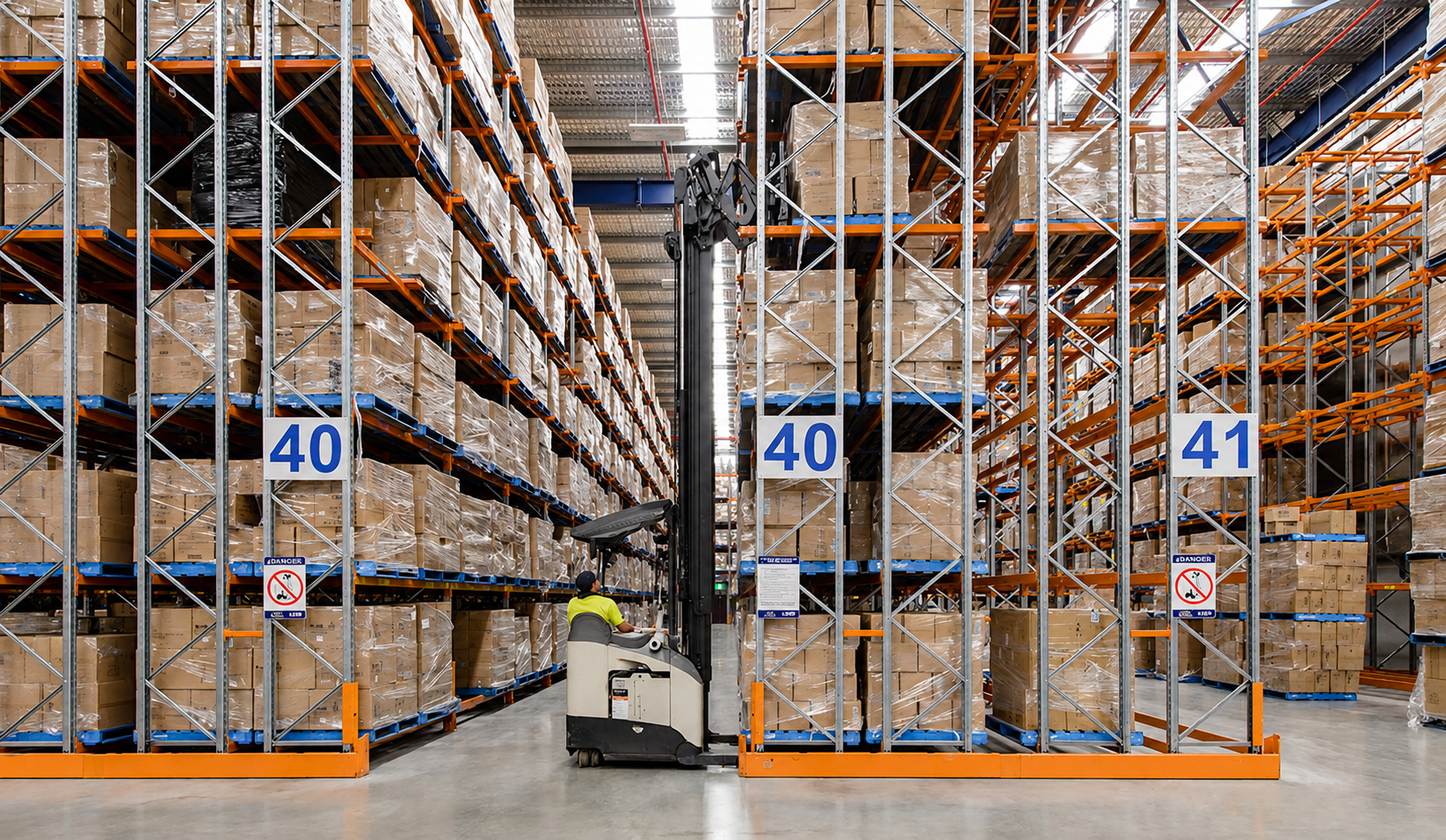
Fig. 1. Choosing the right racking depends on the number of SKUs, inventory turnover, and handling equipment.
1. Selective Racking: Versatility and 100% Access
Selective racking is the most common solution in Mexico and worldwide. Its design provides direct, individual access to any pallet at any level without moving adjacent pallets.
- Advantages: 100% selectivity, compatibility with all types of standard forklifts, easily adjustable levels, and a lower initial cost.
- Disadvantages: Requires a considerable amount of maneuvering aisle space (3.0 to 3.8 meters, depending on the forklift), limiting floor space utilization to 35–40% of the total area.
- Ideal for: Operations with a wide variety of products (many SKUs), mixed-item orders, and omnichannel distribution warehouses.
2. Drive-In / Drive-Through Racking: Maximum Density
In drive-in accumulation systems, forklifts physically enter the rack lanes to place or retrieve pallets on side support rails.
- Drive-In (LIFO): Loading and unloading take place from the same face; the last pallet in is the first pallet out.
- Drive-Through (FIFO): Loading takes place at one end and unloading at the other, ensuring the oldest product leaves first.
- Advantages: Uses up to 85% of the usable floor area by eliminating almost all aisles.
- Ideal for: Refrigerated and frozen storage facilities, or raw material manufacturers handling large, uniform batches.
3. Push-Back and Gravity Pallet Flow Racking
For operations that require high density along with faster, safer handling:
- Push-Back: Pallets are placed on nested rolling carts. Loading a new pallet pushes the previous pallets back. When a pallet is removed, gravity brings the next pallet forward. Stores 2 to 5 pallets deep per lane.
- Gravity pallet flow: Inclined rollers transport pallets from the loading point to the unloading face through gravity-driven movement controlled by brakes. Ensures strict FIFO for perishable or pharmaceutical products.
4. Cantilever Racking: Structural Profiles, Pipes, and Specialized Loads
Designed with vertical columns and cantilever arms, without front uprights that obstruct access. Essential for lumber yards, steel distributors, PVC pipe, and bulky items that cannot be stored in conventional racking.
Comparison of Industrial Racking Types
A comparison to help evaluate your next project:
- Selective: Selectivity: 100% | Density: Medium | Cost: Low | Method: FIFO/LIFO
- Drive-In: Selectivity: Low | Density: Very High | Cost: Medium | Method: LIFO
- Push-Back: Selectivity: Medium | Density: High | Cost: Medium–High | Method: LIFO per lane
- Pallet flow: Selectivity: Medium | Density: High | Cost: High | Method: Strict FIFO
- Cantilever: Selectivity: High | Density: Variable | Cost: Medium | Long loads
Unsure Which Racking Type Your Products Need?
At LT Group, we model your operation in 3D to compare the pallet capacity and shipping speed you would achieve with each system.
{“@context”:”https://schema.org”,”@graph”:[{“@type”:”BlogPosting”,”headline”:”Types of Industrial Warehouse Racking: A Comparison of Storage Systems”,”image”:[“https://logistictrade.com/en/wp-content/uploads/racks-Industryes-2.png”],”datePublished”:”2026-09-28T18:30:00+00:00″,”dateModified”:”2026-09-28T18:30:00+00:00″,”author”:{“@type”:”Organization”,”name”:”LT Group”,”url”:”https://logistictrade.com/en/”},”publisher”:{“@type”:”Organization”,”name”:”LT Group (Logistic Trade)”,”logo”:{“@type”:”ImageObject”,”url”:”https://logistictrade.com/en/wp-content/uploads/2025/10/LT-Group.svg”}},”description”:”A comprehensive comparison of industrial racking types: selective, drive-in, push-back, pallet flow and cantilever. Find out which works best for your operation.”},{“@type”:”FAQPage”,”mainEntity”:[{“@type”:”Question”,”name”:”Which Type of industrial Racking Is Most Commonly Used in Warehouses?”,”acceptedAnswer”:{“@type”:”Answer”,”text”:”Selective racking is the most widely used because of its versatility, providing direct access to 100% of pallets and compatibility with any type of forklift.”}},{“@type”:”Question”,”name”:”Which Racking Is Best for Products with Expiration Dates (FIFO)?”,”acceptedAnswer”:{“@type”:”Answer”,”text”:”Gravity pallet flow and drive-through racking are ideal for ensuring that the first product in is the first product out.”}}]}]}